When Nature Joins the Guest List: The Refined Art of Entertaining at the Water's Edge
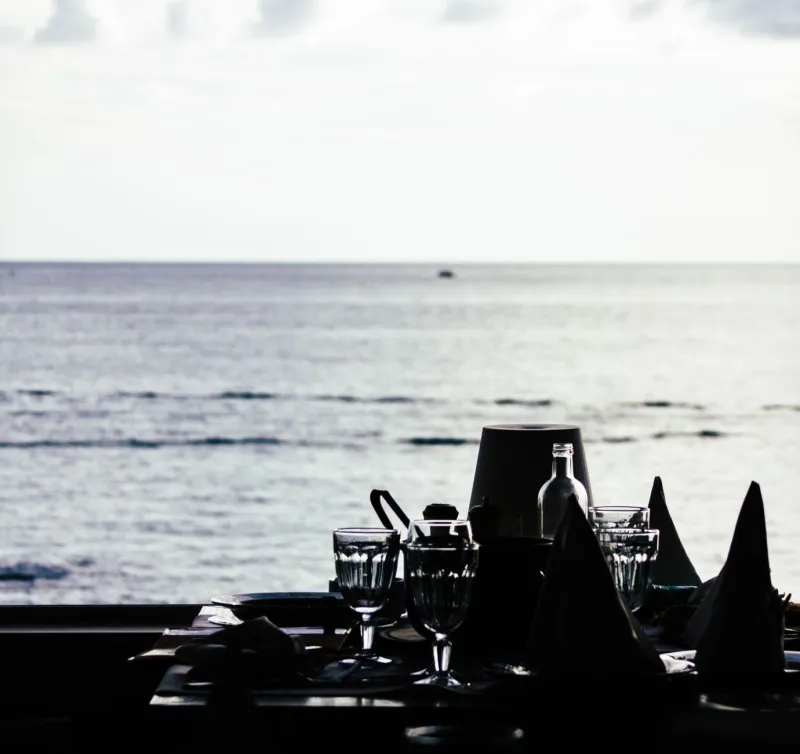
There is a particular kind of confidence required to host beside the ocean. It is not the bravado of someone who has simply secured a beautiful venue, but rather the quiet assurance of someone who has learned to collaborate with an environment that operates entirely on its own terms. The sea does not defer to itineraries. It does not soften its breezes because the napkins have been pressed. And yet, for those who understand how to work with the shore rather than against it, coastal entertaining achieves a quality of elegance that no inland setting can replicate.
At Le Rivage Beach Club, we have observed — and had the privilege of facilitating — gatherings of every scale and intention. What distinguishes the truly memorable from the merely pleasant is rarely the budget. It is almost always the host's relationship with the natural world surrounding them.
Reading the Shore Before You Plan the Menu
Seasoned coastal hosts begin their planning not with a florist or a caterer, but with a tide chart. This is not mere practicality — it is philosophy. The timing of high and low tide shapes the visual and physical landscape of any beachside event in ways that are difficult to overstate. A late afternoon gathering scheduled at low tide offers expansive stretches of wet sand, cooler temperatures, and a certain meditative openness to the horizon. High tide, by contrast, compresses the shoreline and amplifies the sound and presence of the water — more dramatic, more intimate, more suited to evening occasions where the mood calls for something closer to theater.
Equally essential is an understanding of coastal light. The so-called golden hour along the Atlantic or Pacific seaboard is not a single moment but a sustained interval of extraordinary quality — warm, directional, and deeply flattering. Experienced hosts at our club have long structured cocktail service to coincide precisely with this window, positioning guests to face the light rather than squint against it. The result is a room — or rather, an open-air gathering — that photographs beautifully and feels, to those within it, as though the world has been briefly gilded on their behalf.
The Wind Question: Embrace, Mitigate, or Redirect
No element tests a coastal host's composure quite like the wind. It topples arrangements, carries conversation away mid-sentence, and has a particular talent for arriving at the precise moment the first course is being placed. The instinct among inexperienced hosts is to fight it — to weight everything down, erect barriers, and hope for calm. The more sophisticated response is to design around it from the outset.
This begins with table orientation. Seating guests with their backs to the prevailing wind direction, rather than facing into it, changes the entire character of the experience. Menu choices should also reflect the environment: lighter garnishes, covered presentation until the moment of service, and a preference for dishes that are not diminished by a degree or two of temperature loss. A chilled seafood plateau, for instance, is not only appropriate to the setting — it is genuinely improved by a coastal breeze.
For floral and decorative arrangements, the wisest hosts at luxury beach properties tend toward low, architectural compositions — succulents, driftwood, dense blooms in weighted vessels — rather than tall, delicate centerpieces that will spend the evening in quiet battle with the elements. The aesthetic, when done well, reads not as a concession to practicality but as a deliberate expression of the environment itself.
Salt Air and the Details That Matter
The coastal atmosphere is generous with beauty and somewhat less generous with certain materials. Salt air works quickly on linens, metals, and anything with a high-polish finish. Hosts who understand this plan accordingly: natural fibers over synthetics, matte finishes over lacquered ones, and a general preference for materials that age gracefully rather than those that merely look impressive indoors.
This philosophy extends to tableware. At many of the finest beach clubs along the American coastline, the most thoughtful hosts have moved away from formal silver service — not because formality is unwelcome, but because the setting calls for a different register of elegance. Ceramic, stone, and heavy glassware in warm, natural tones feel at home beside the water in a way that ornate silverware, however beautiful in a dining room, often does not.
The scent of the environment also warrants consideration. The ocean is not subtle. When candles or floral fragrance compete with salt air, the effect can feel incongruous — a collision of sensory worlds rather than a coherent experience. The most refined coastal hosts either lean entirely into the natural fragrance of the shore or choose complementary notes — sea grass, white tea, light citrus — that feel like an extension of the environment rather than an imposition upon it.
Pacing the Evening Alongside the Tides
One of the most overlooked aspects of coastal entertaining is the natural rhythm that the ocean itself imposes on any gathering. The shore has a pace — unhurried, cyclical, punctuated by the soft percussion of waves — and events that honor this rhythm tend to feel more satisfying than those that rush against it.
Club directors with decades of experience hosting private events at premier beach properties consistently note that the most successful gatherings build deliberately toward a single, unhurried focal point rather than attempting to sustain a high pitch of activity throughout. A long, leisurely dinner timed to conclude as the last light leaves the sky. A small bonfire or lantern lighting as the tide retreats. A quiet interlude between cocktails and the main course, during which guests are simply invited to walk the waterline.
These pauses, which less experienced hosts sometimes fear as awkward silences, are in fact the moments guests remember most vividly. The ocean fills them entirely.
The Etiquette of Letting Go
Perhaps the most important lesson the shore teaches the accomplished host is the art of graceful surrender. No coastal gathering unfolds exactly as planned. The wind shifts. The light comes earlier or later than expected. A rogue wave advances farther up the sand than anticipated, and someone's shoes are sacrificed to the cause.
The host who responds to these moments with visible anxiety transmits that anxiety to every guest at the table. The host who receives them with ease — with humor, with a quiet word to the staff, with an equanimity that signals genuine comfort in the environment — transforms each small disruption into something that deepens the occasion rather than diminishing it.
This, ultimately, is the distinguishing quality of those who entertain most memorably at the water's edge. They have made peace with the ocean's indifference to their plans and, in doing so, discovered that the ocean is, in fact, the finest co-host one could ask for — unpredictable, magnificent, and entirely committed to the moment.