From the Day Boat to the Table: How America's Premier Beach Clubs Turned the Daily Catch Into the Ultimate Statement
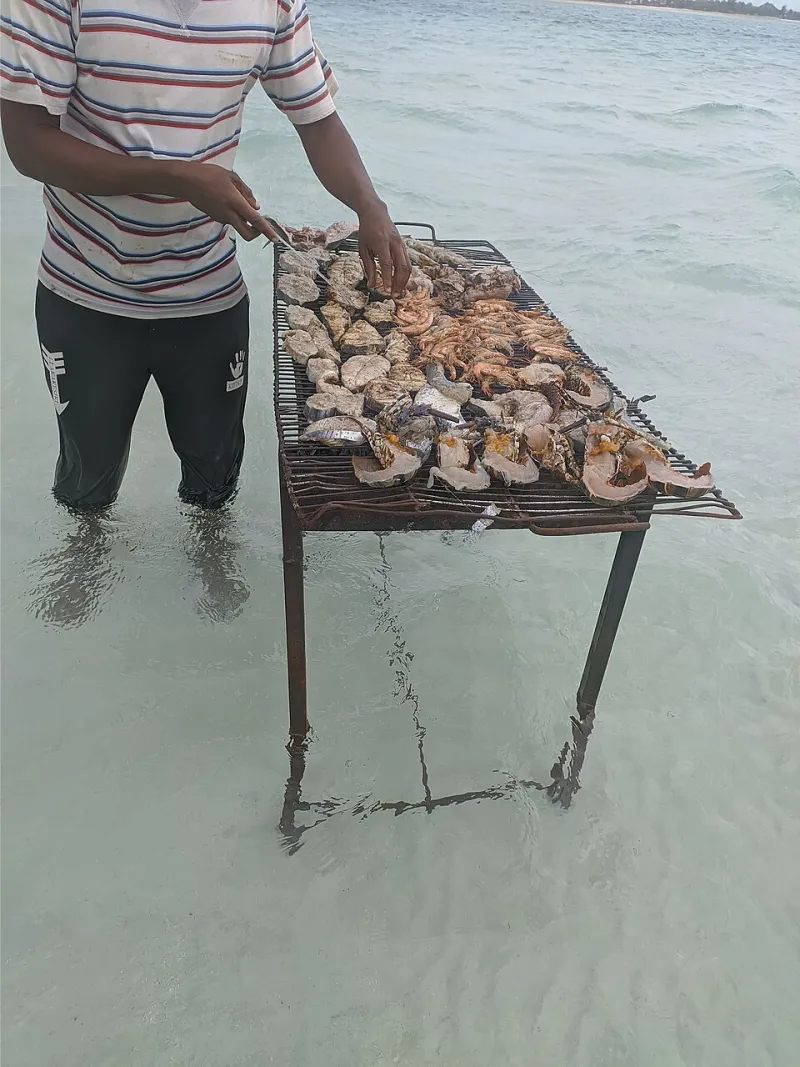
Photo: Lebu Ayiga, CC BY-SA 4.0, via Wikimedia Commons
At a handful of the most respected beach clubs in the United States, the evening menu is a document of extraordinary confidence: printed at four in the afternoon, obsolete by ten. Whatever the boats brought in that morning is what the kitchen cooks. Whatever they did not, the guests never learn existed.
This is the day-boat-only model, and it has quietly become the most persuasive culinary argument a coastal property can make.
What 'Day Boat' Actually Means
The term refers to vessels that head out and return within a single day — no week-long freezing at sea, no transshipment through distant ports. The fish that arrives at the dock at dawn was swimming the night before. In practice, this limits a kitchen to whatever local waters yield: snapper and grouper along the Gulf, stripers and fluke in the Northeast, yellowtail and halibut on the Pacific side.
For a club kitchen, the constraint is severe. For a club chef, it is liberation. 'I stopped designing menus and started designing relationships,' as one Northeast club chef puts it. 'My most important supplier meeting happens on a dock at six a.m.'
Five Ingredients, One Ocean
The cooking style that has emerged from this model is deliberately spare. A whole fish, simply grilled over hardwood. A squeeze of citrus, olive oil, sea salt, something green from the kitchen garden. When the product is hours old, the chef's job shifts from transformation to translation — the dish exists to introduce the fish to the guest, not to disguise it.
Several clubs have formalized the philosophy into a standing format: a daily whole-fish presentation, carved tableside, with accompaniments limited to what the property itself can grow or forage. The simplicity is the flex. Anyone can source truffles. Not everyone can serve a fish that outswam the competition that morning.
Why the Model Suits the Club World
Luxury beach clubs are uniquely positioned to make this economics work. Their membership dines repeatedly across a season, which means the kitchen can take risks a hotel restaurant cannot — some nights the catch is spectacular, some nights it is modest, and the membership has learned to trust the arc rather than judge the single plate.
There is also a supply-chain elegance. Clubs with genuine dock relationships often buy the entire landing of a single small boat, paying fishermen fairly and eliminating the anonymous middle of the commodity market. Members increasingly ask about provenance; the best clubs can answer with a name, a vessel, and a tide chart.
The Guest Experience
For the traveler, the practical effect is a dining experience that cannot be replicated inland, at any price. The menu changes daily because the ocean does. Servers narrate the morning's landing the way a sommelier narrates a vintage. Regular members develop loyalties — to a preparation, a fisherman, a week of the season.
It is a small revolution, executed quietly at tables a few steps from the water: proof that the most luxurious ingredient in American coastal dining is not luxury at all. It is proximity.