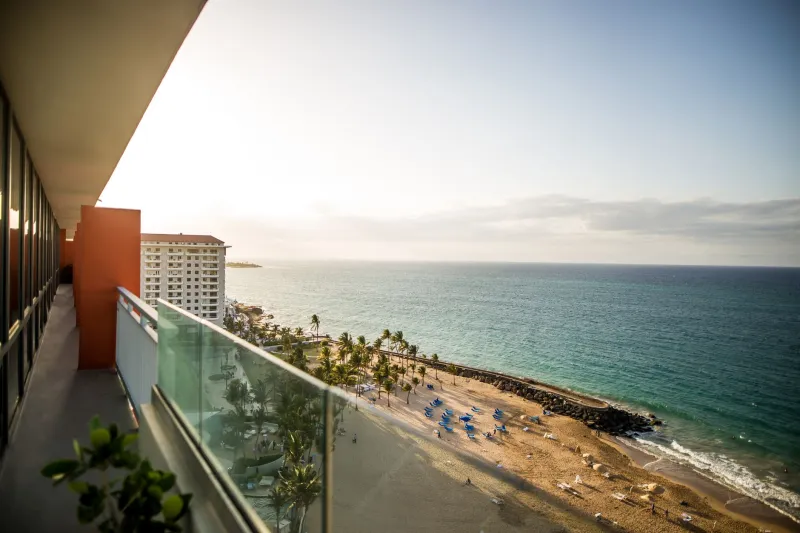
The Journey Is the Ritual: Reimagining How the Discerning Traveler Arrives at the Shore

There is a particular quality of light that appears somewhere along the coastal highway — perhaps an hour outside of the city, when the inland air softens and the tree line opens briefly to reveal a distant shimmer of water. For those who have learned to pay attention, this is not merely a geographical marker. It is an invitation to begin the transformation that a great coastal retreat demands.
Yet for years, the travel industry treated arrival as an inconvenience to be minimized — a logistical gap between the life one was escaping and the life one wished to inhabit, if only briefly. The finest hotels competed on the speed of their transfers. The measure of excellence was frictionlessness, efficiency, the elimination of every moment that felt like transit.
Something has shifted. Among the most discerning travelers today, the journey to the shore is no longer regarded as an obstacle. It is understood as the first act of the escape itself — a carefully composed passage that, when properly attended to, begins the psychological work of coastal renewal long before one's feet touch the sand.
The Psychological Architecture of Transition
Research in environmental psychology has long suggested that meaningful transitions require time. The human mind does not reset instantaneously; it requires gradual decompression, sensory cues, and a deliberate loosening of the cognitive load that accumulates over weeks of professional and domestic obligation. A rushed journey — a crowded terminal, an anonymous car service, a highway indistinguishable from a hundred other highways — offers none of these conditions.
The clubs and properties that understand this are designing the approach accordingly. Where once a standard black SUV transfer sufficed, today's elite coastal establishments are curating the entire corridor from departure city to shoreline. The vehicle itself matters: temperature-controlled to the guest's preference, stocked not with generic minibar items but with regionally sourced provisions — a chilled bottle from a nearby vineyard, a small tin of local preserves, a folded newspaper if the guest has indicated a preference for quiet news rather than digital silence.
The route, too, is considered. When time permits, the scenic alternative to the interstate is not merely offered but recommended — not as an affectation, but as a genuine service. The coastal roads of New England, the barrier island causeways of the Carolinas, the salt marsh approaches of the Georgia coast: these are not detours. They are transitions, and the best ones are irreplaceable.
Private Aviation and the Carefully Composed Handoff
For guests arriving by private aircraft — a growing preference among those who have restructured their travel around intentionality rather than convenience alone — the choreography becomes even more deliberate. The finest beach clubs have established relationships with regional FBOs and charter services not merely to facilitate transport but to extend the club's atmosphere into the air itself.
This means more than a branded welcome card waiting in the cabin. It means that a club's hospitality team has communicated with the flight crew about the guest's preferences, that the ground transfer is positioned before the aircraft has fully taxied, and that the first exchange upon landing feels less like a transaction and more like a warm and familiar continuation. The guest does not enter a new environment at the club's front gate. They have, in a sense, already arrived — the club simply becomes more visible.
Scenic Itineraries as a Form of Curation
For those traveling by road from major metropolitan areas — Boston, New York, Washington, Atlanta, Miami — a growing number of properties are offering what might be called curated approach itineraries. These are not tour guides or sightseeing detours. They are thoughtfully assembled suggestions: a particular coastal overlook worth a ten-minute pause, a small-town bakery whose morning pastries have been vetted and found worthy, a stretch of road where the dunes rise high enough that the ocean remains hidden until one crests the final hill and the view opens, sudden and complete.
These moments are engineered for effect — and there is no apology in that. The best hospitality has always been a form of deliberate design. A curated arrival route simply extends that design philosophy beyond the property's boundaries, acknowledging that the guest's experience does not begin at the gate.
The Status of Slowness
There is a cultural dimension to this shift that deserves acknowledgment. Among a certain stratum of American affluence, the performance of busyness has lost much of its former currency. The traveler who boards the earliest possible flight, rushes through transfer, and checks in before lunch is no longer signaling ambition. They are signaling a failure of imagination — or, more charitably, a failure to recognize that their most valuable resource is no longer money or access but attention.
The traveler who takes the long road, who pauses at the overlook, who arrives unhurried and already half-transformed by the journey — this is the traveler who understands what a coastal retreat is actually for. The arrival, treated as ritual rather than logistics, is itself a declaration: that one has chosen depth over speed, presence over productivity.
This is, in the truest sense, a form of sophistication. And it is precisely the kind of sophistication that the most considered coastal properties are now designed to support.
Arriving Already Present
At Le Rivage, the philosophy has always held that the shore is not simply a place but a state of mind — and that reaching it requires more than physical relocation. The transition from the demands of professional and urban life to the particular quality of ease that the coast makes possible is a genuine psychological journey, and it benefits from being honored as such.
Guests who have taken the time to compose their arrival — who have chosen the scenic route, accepted the unhurried transfer, allowed the landscape to do its quiet work — consistently describe their first hours at the water differently from those who arrived in haste. There is less of the restlessness that so often marks the first day of a vacation, that unsettled energy of a mind that has not yet caught up with the body's change of latitude. There is, instead, an immediate settledness — a sense of having arrived not just at a destination but at a particular quality of being.
The most exclusive beach clubs in America are beginning to understand that this quality is not incidental. It is the product of intention, and it begins — as all great things do — long before the moment it becomes visible.