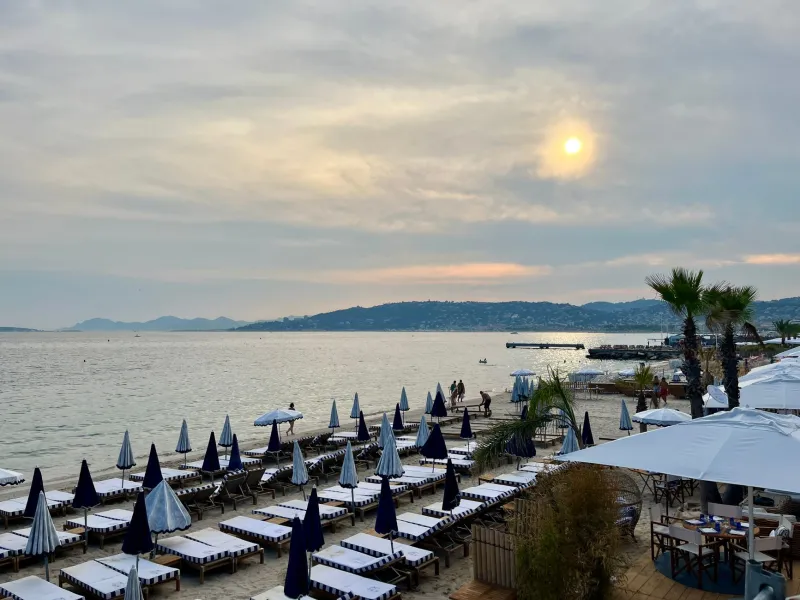
The Discipline of Less: How the Most Coveted Beach Clubs Are Using Strategic Restraint to Deepen Luxury
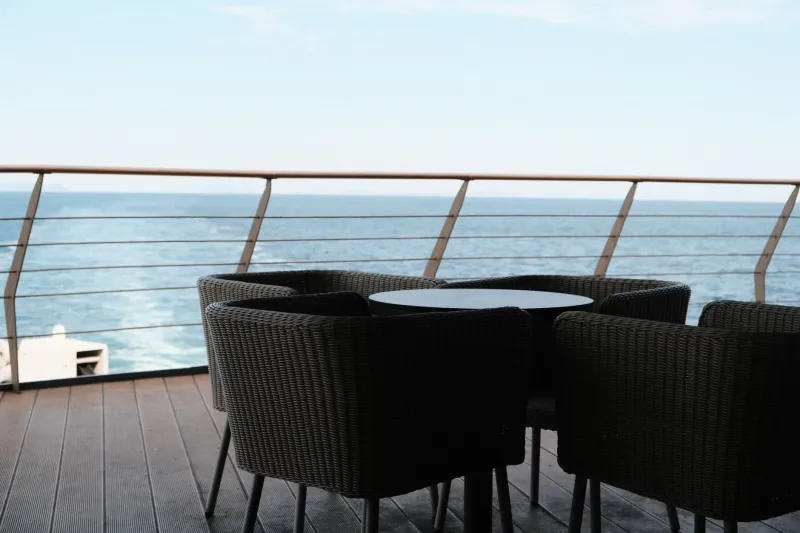
There is a particular kind of fatigue that arrives not from doing too much, but from being offered too much. Any traveler who has stood before a resort's eighteen-page activities menu, or scrolled through a dining app presenting forty-seven restaurant options within walking distance, will recognize the sensation: a subtle but persistent anxiety dressed in the clothing of abundance. Choice, it turns out, is not always a gift.
The most perceptive minds in luxury hospitality have been watching this dynamic unfold for years. And the response emerging from America's most distinguished beach clubs is, by conventional standards, counterintuitive. Rather than expanding their menus, multiplying their programming, or wiring every square foot of their property for seamless connectivity, they are doing something far more demanding—and far more generous. They are editing.
The Philosophy Behind the Constraint
To understand strategic scarcity, one must first set aside the instinct to equate volume with value. The philosophy operating beneath the surface of these clubs is not austerity for its own sake. It is, rather, a recognition that the human capacity for genuine rest is easily overwhelmed by the machinery of modern hospitality when that machinery runs unchecked.
At its core, the approach borrows from principles long understood in the design world: that a well-considered negative space is not an absence, but an active force. A dining room with twelve tables, each booking available only twice daily, does not offer less than a sprawling restaurant with open seating. It offers something categorically different—anticipation, intention, and the quiet satisfaction of a reservation that actually means something.
The same logic extends to activity programming. When a beach club presents a tightly curated schedule—a morning paddleboard session, an afternoon guided shoreline walk, an evening lecture on coastal ecology—it removes the paralysis of infinite selection. Guests do not spend their mornings negotiating with a laminated brochure. They arrive at the water's edge already oriented, already present.
What Disappears When the WiFi Does
Perhaps no element of the strategic restraint conversation generates more initial resistance—or, upon reflection, more gratitude—than the deliberate limitation of wireless connectivity. Several of the most sought-after coastal clubs in the Carolinas, the Florida Gulf Coast, and along the New England shore have now established what they term "presence zones": stretches of beach, garden, and terrace where the signal is intentionally attenuated or simply absent.
The objections, predictably, arrive before the stay. The appreciation tends to arrive during it.
There is a neurological dimension worth acknowledging here. Research into attention restoration theory has long suggested that natural environments possess a particular capacity to replenish cognitive resources depleted by the demands of modern professional life. But that restoration is substantially impeded when the device in one's pocket continues to assert the claims of the working world. A beach, however beautiful, is not fully experienced from behind a screen.
By creating physical spaces where the ambient pull of connectivity simply does not reach, these clubs are not inconveniencing their guests. They are protecting them—from the reflexive scroll, the unnecessary refresh, the invisible tether to obligations that the shore was meant, however briefly, to dissolve.
The Curated Calendar as an Act of Hospitality
There is an art to designing a restricted schedule that does not feel restrictive. The clubs executing this approach most successfully understand that the goal is not to impose a structure, but to offer one—and to make that offer feel like relief rather than limitation.
The distinction lies in the quality and coherence of what remains after the editing. A club that offers three exceptional dining experiences, each timed to the natural rhythms of the day and the tides, provides something more memorable than a property with six restaurants operating on competing schedules. A morning yoga session positioned precisely to catch the low-angle light over the water, followed by a late breakfast served without urgency, creates a shape to the day that guests carry with them long after checkout.
This is hospitality as curation in its most genuine sense—not the word as it is casually applied to any assembled collection, but curation as an act of sustained editorial judgment. Someone, somewhere, made a considered decision about what to include and what to release. That decision, when made well, is felt by every guest who walks through the door, even if they could not articulate precisely why the experience felt so coherent.
The Counterintuitive Signal of Exclusivity
For the American luxury traveler, accustomed to equating premium price points with maximum provision, the shift toward deliberate constraint carries an additional layer of meaning: it has become one of the clearest signals of genuine exclusivity.
Any property with sufficient capital can install a spa with forty treatment rooms, a beach lined with motorized water toys, and a dining program that operates around the clock. What requires genuine confidence—and genuine understanding of one's clientele—is the decision to offer fewer reservations, shorter activity windows, and quieter evenings. That restraint communicates, without announcement, that the club is not competing for attention. It already has the right guests.
Discerning travelers recognize this signal intuitively. A beach club that trusts its guests to inhabit stillness, to find their own rhythm within a considered framework, is a club that understands what its guests actually came for. Not stimulation. Not the performance of luxury. But the rarer and more elusive experience of feeling genuinely, unhurriedly restored.
Arriving Ready to Receive Less
There is, admittedly, a period of adjustment. Guests accustomed to the maximalist model of resort hospitality may spend their first hours at such a property reaching for what is not there—the entertainment menu, the instant dining reservation, the WiFi password that unlocks the familiar current of distraction. This is not a failure of the property. It is, in fact, the beginning of the experience.
The clubs that handle this transition most gracefully do so through thoughtful arrival rituals: a personal orientation that frames the structure of the stay not as limitation but as gift, a welcome that communicates genuine pleasure at the guest's presence rather than a recitation of available services. The message, conveyed without being stated, is that the guest has arrived somewhere that has thought carefully about what they need—and has had the discipline to provide exactly that, and nothing more.
At Le Rivage, we understand this philosophy as something more than a design trend. It is a commitment to the idea that the shore, at its finest, is not a backdrop for distraction. It is an invitation to arrive—fully, unhurriedly, and without the weight of everything that was deliberately left behind.
The most sophisticated travelers are beginning to understand that the beach club willing to remove something is often the one that has thought most carefully about what the experience is truly for. And in that discipline of less, they are finding something that abundance, for all its abundance, rarely provides: enough.