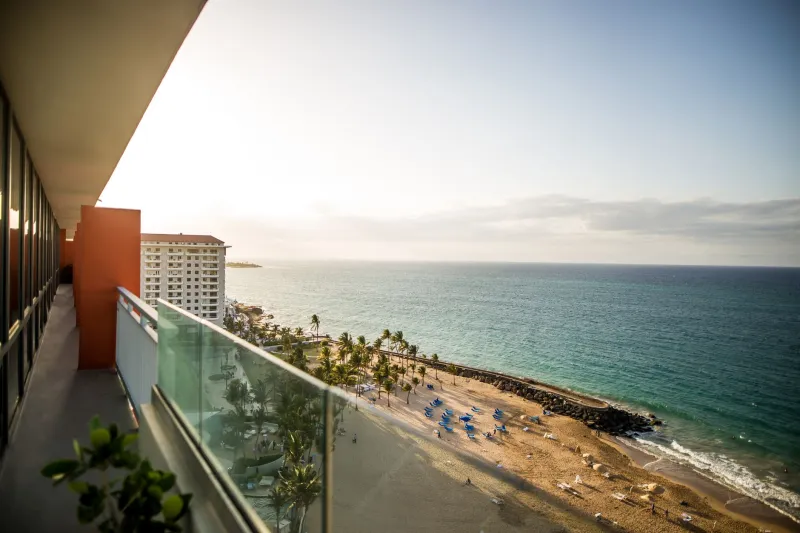
The Shore as Home Base: How Affluent Travelers Are Trading Deeds for Deep Belonging at Luxury Beach Clubs

There is a particular kind of freedom that arrives not from accumulation, but from elegant simplification. For a certain kind of traveler — one who has perhaps already owned the beach house, managed the seasonal staff, and weathered the annual assessment notices — that freedom is increasingly found not in a property title, but in the quiet confidence of knowing that a specific stretch of shore will always be ready, always be refined, and always feel unmistakably like theirs.
Across the American coastline, from the Atlantic barrier islands of the Carolinas to the sun-drenched bluffs of Southern California, a significant shift is underway. Luxury beach clubs that once catered to the summer sojourner are evolving into something more enduring: semi-permanent addresses for the perpetually mobile. Extended residency programs, tiered annual memberships, and dedicated suite arrangements are transforming the traditional resort stay into something closer to an anchored lifestyle — one that travels well, demands little administrative energy, and delivers a consistency that even the finest privately owned properties rarely achieve.
The Weight of the Second Home
The appeal of the coastal second home has long been woven into the American imagination of success. Yet for many who have lived that reality, the romance eventually collides with a more complicated truth. Properties require property managers. Seasonal rentals introduce strangers into intimate spaces. Maintenance costs compound quietly, and the logistics of opening and closing a home — even a magnificent one — consume the very leisure hours they were meant to protect.
"At a certain point, the house was managing us rather than the other way around," reflects one longtime member of a private coastal club in the Florida Panhandle, who asked to remain anonymous. "We were spending the first three days of every visit dealing with what had gone wrong since we'd last been there. The idea that we could simply arrive somewhere that was already perfect — that was transformative."
This sentiment, once considered an admission of defeat among a certain set, has gradually become a mark of discernment. The conversation has shifted from what one owns to what one experiences, and luxury beach clubs have been astute enough to position themselves precisely at that inflection point.
Membership Reimagined
The mechanics of this evolution vary by property, but the underlying architecture is consistent. Where traditional memberships once offered access to amenities — the pool, the dining room, the beach attendants — the new generation of extended programs offers something more substantive: priority accommodation arrangements, dedicated storage for personal effects, consistent staff relationships, and in some cases, the ability to customize one's residential suite over time.
Several of the most sought-after clubs along the Eastern Seaboard now offer what might be described as residential membership tiers, wherein a member effectively reserves a specific accommodation category for a defined number of weeks annually, with the flexibility to redistribute those weeks across seasons based on preference. The financial calculus is not incidental: when compared against the carrying costs of a comparable coastal property — mortgage interest, property taxes, insurance, maintenance reserves, and the opportunity cost of capital — the premium membership often represents a measurable economic advantage, to say nothing of the freedom it affords.
Club directors who oversee these programs speak consistently of one particular quality that members cite above all others: the depth of relationship that accumulates over time. When a guest returns not once but dozens of times across multiple years, the staff learns preferences that no rental platform algorithm could anticipate. The preferred table. The way the coffee should arrive. The understanding that certain mornings call for absolute privacy and others for gentle engagement.
"Genuine luxury is not about what you spend," observed one club director at a private property in coastal Maine. "It is about what you no longer have to explain."
The Psychology of Belonging
Beyond the financial and logistical dimensions, there is a psychological dimension to this phenomenon that deserves careful consideration. The perpetually mobile life — one characterized by international travel, multiple residences, and the constant recalibration of context — can produce a subtle but persistent sense of rootlessness. The luxury beach club, when approached as a true anchor rather than merely a destination, offers a counterweight to that drift.
There is an architecture to belonging that has little to do with ownership. It is built from accumulated small recognitions: the staff member who remembers that you prefer the northeast-facing cabana, the chef who knows that you will want the local catch prepared simply, the quiet understanding that your arrival is expected and genuinely welcomed. These are not trivial pleasures. For those who spend the majority of their professional lives navigating anonymous environments — airport lounges, conference hotels, corporate dining rooms — the sensation of being known in a beautiful place carries a resonance that is difficult to overstate.
Social scientists who study high-net-worth lifestyle patterns have noted that the concept of "place attachment" — the emotional bond between a person and a specific location — does not require ownership to take root. What it requires is repetition, recognition, and the gradual accumulation of memory. A well-run luxury beach club, precisely because of its commitment to consistency and personalization, can foster that attachment as effectively as any property, and in some respects more so.
Designing a Life Around the Shore
For those considering this transition, the practical dimensions are worth examining thoughtfully. The most successful arrangements tend to share certain characteristics. First, the member has been honest with themselves about how they actually use a coastal property, rather than how they imagine they might use it. Many discover that their genuine desire is for four to six concentrated weeks of coastal living annually, not the year-round availability that a second home theoretically provides.
Second, the relationship between member and club is treated as a genuine partnership rather than a transactional exchange. The best clubs encourage this through dedicated member liaisons, annual planning conversations, and genuine flexibility when life's unpredictability — a professional commitment, a family circumstance — requires a shift in timing.
Third, and perhaps most importantly, the member chooses a property where the ethos aligns with their own. A beach club is not simply a collection of amenities; it is a community with a particular sensibility, a rhythm, a set of values expressed through every interaction. The decision to anchor one's coastal life to a specific address is, in a meaningful sense, a decision about the kind of place one wishes to inhabit — and the kind of person one wishes to be while inhabiting it.
A Different Kind of Permanence
The finest coastal addresses have always understood that the shore offers something more than scenery. It offers perspective — the particular clarity that arrives when one is positioned at the edge of something vast and unhurried. What is emerging now is the recognition that this perspective need not be a seasonal indulgence. It can be a consistent reference point, a place to which one returns not merely for vacation but for restoration, for recalibration, for the quiet pleasure of being somewhere that already knows your name.
The deed, in this understanding, is not what creates home. What creates home is the slow accumulation of mornings well spent, of evenings that did not require explanation, of a shoreline that has come to feel, against all logic, entirely one's own.