The Pull of the Familiar Shore: Why the Most Discerning Travelers Return to the Same Beach Club Year After Year
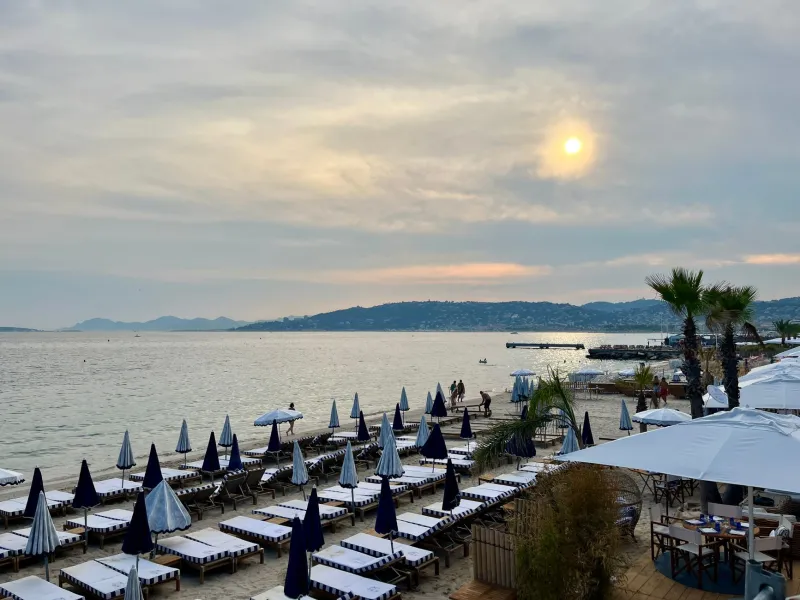
There is a particular kind of traveler who has seen nearly everything. They have taken the private villa in Mustique, the overwater bungalow in the Maldives, the cliff-side retreat on the Amalfi Coast. They have, in short, done the work of discovery. And yet, when summer approaches — or when autumn begins its slow, golden retreat — they find themselves reaching for the same reservation, the same phone number, the same beloved stretch of coastline they have claimed as their own for a decade or more.
This is not nostalgia. This is connoisseurship.
The Psychology of the Chosen Place
Psychologists who study the relationship between place and identity have long noted that human beings possess a profound capacity for what researchers call place attachment — the emotional bonds formed between a person and a specific environment. For most people, this manifests as childhood memories, a grandparent's home, a college town. For the affluent traveler, however, it can crystallize around something far more refined: a particular beach club where the staff knows your preferred lounger, where the sommelier has already set aside a bottle of the Burgundy you favored last July, where the light falls across the water at dusk in a way that feels, somehow, personally arranged.
Dr. Miriam Holloway, a behavioral researcher who has studied luxury travel patterns among high-net-worth individuals, describes this phenomenon as "earned intimacy." "The first visit to any destination is largely transactional," she explains. "You are assessing, cataloguing, deciding. By the third or fourth return, something shifts. You stop being a guest and begin to be a presence. The place knows you. That is an extraordinarily rare and valuable thing."
For the discerning traveler who has the means to go anywhere, the decision to return is, paradoxically, the most sophisticated choice available.
What Loyalty Actually Looks Like
Speak with members who have been returning to the same elite beach club for fifteen or twenty years, and a consistent portrait emerges. It is rarely about the amenities alone — though those, naturally, must remain impeccable. It is about the accumulation of a private history.
Eleanor Voss, a retired attorney from Boston who has spent at least two weeks each summer at the same coastal club in Maine for the past eighteen years, describes it this way: "The first year, I was impressed. The second year, I was comfortable. By the fifth year, I realized I was home — but a version of home with better wine and someone else making the beds."
Her account echoes across the community of devoted repeat visitors. There is the family from Atlanta that has occupied the same set of cabanas every Fourth of July weekend since their eldest child was in a stroller — that child is now in law school. There is the couple from San Francisco who have marked every anniversary at the same shoreside table for a quarter century, and who were quietly devastated the year a kitchen renovation temporarily relocated the dining terrace. The table, they will tell you, was non-negotiable. The club, to its credit, understood.
How the Finest Clubs Cultivate — and Sustain — Return
The most exceptional beach clubs understand that loyalty is not given; it is architected. The mechanics of this are subtle but deliberate, operating far beneath the surface of what a casual observer might notice.
Seasonal evolution is perhaps the most essential tool. A club that offers the identical experience in year fifteen as it did in year one has made a fundamental miscalculation. The returning guest is not seeking stasis — they are seeking the comfort of the familiar alongside the pleasure of discovery. The finest properties manage this balance with remarkable precision: rotating artists in residence, introducing a new tasting menu each season, debuting a redesigned wellness program that builds upon rather than replaces what came before.
Personalization, meanwhile, has deepened well beyond the superficial. Guest preference profiles at leading clubs now extend across years and visits, capturing not merely dietary restrictions and pillow preferences but emotional patterns — which guests prefer solitude in the mornings, which families appreciate a quiet acknowledgment of a milestone rather than a public celebration, which members are best approached with a new recommendation and which prefer to discover things on their own terms.
The language of belonging is equally carefully managed. There is a meaningful difference between being called a "loyal guest" and being called, simply, a member of the community — someone whose presence is expected, whose absence would genuinely be noted. The best clubs communicate the latter without ever stating it directly.
The Seasonal Lens: Why Each Return Is, in Fact, a First
One of the quiet revelations that long-returning guests frequently describe is this: despite the familiarity, no two visits are truly alike. The shore itself ensures this. The Atlantic in May bears almost no resemblance to the Atlantic in September. The light changes. The pace of the water changes. The particular quality of silence on the beach at six in the morning in October is a wholly different silence than the one that greets you in June.
The most thoughtful clubs lean into this seasonal dimensionality rather than fighting it. A property that understands its own coastline — its migratory birds, its tidal rhythms, its local harvests — can offer a guest who returns across multiple seasons an experience that is, in a very real sense, perpetually fresh. A member who visits in early spring will encounter a shore still shaking off winter, intimate and unhurried. The same guest in August finds a different world entirely: abundant, social, vivid. Both are the same club. Neither is the same experience.
The Deepest Reward: Becoming Part of the Story
There is a final dimension to the repeat visit that transcends amenity and personalization alike. It is the sense — quietly profound — that one has become part of a place's living history.
The clubs that endure across generations do so because they understand that their most devoted guests are not merely consumers of an experience; they are co-authors of it. The family that has returned for twenty summers has contributed something intangible but real to the texture of that place. The staff who have watched children grow, celebrated anniversaries, quietly honored losses — they carry those stories. The club itself carries them.
For the traveler who has the luxury of choosing anywhere in the world, there is no more meaningful destination than the one that has chosen them back.
At Le Rivage, we believe that the shore is not merely a backdrop for a singular escape — it is the setting for a life's continuing chapter. The most discerning travelers have always understood this. They return not because they have run out of new places to discover, but because they have found something far rarer: a place that knows them.
The encore, it turns out, is the performance worth waiting for.